Retinol Broke You Out? Try the 'Retinol Sandwich' Before You Give Up
⚡ The 30-Second Version
- ✓The 'retinol sandwich' — moisturizer, then retinol, then moisturizer again — buffers a retinoid between two layers of barrier cream instead of applying it straight to bare skin.
- ✓It's not a gimmick: a 2006 dermatology study found pre-treating and continuing to use a barrier-repair moisturizer during retinoid therapy measurably improved tolerance and reduced irritation.
- ✓It doesn't weaken the retinoid — you're diluting how it contacts skin, not its potency. Beginners and sensitive/reactive skin get the most benefit from sandwiching.
- ✓Non-negotiable: daytime sunscreen. Retinoids increase sun sensitivity, and skipping SPF undoes the whole routine.
If your skin turned red, tight, or flaky the first time you tried retinol, the instinct is to assume your skin 'can't handle actives' and give up. Before you do — the problem is usually the delivery, not the ingredient. There's a simple layering trick called the retinol sandwich that lets sensitive and beginner skin use the same retinoid at the same strength with a fraction of the irritation.
What the retinol sandwich actually is
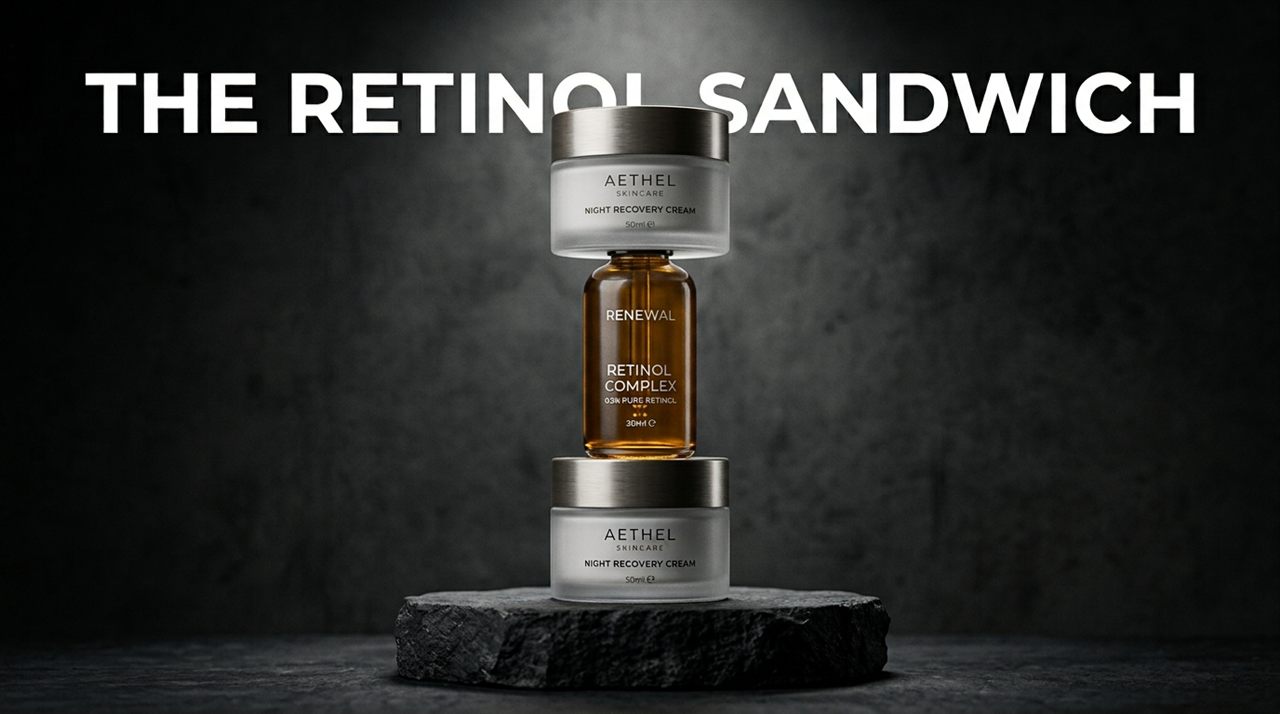
The technique is exactly what it sounds like: moisturizer, then your retinoid, then moisturizer again. Instead of applying retinol directly to bare, dry skin — where it hits at full concentration — you apply a thin layer of plain moisturizer first, let it absorb for a few minutes, apply your retinol on top, then cap it with another layer of moisturizer once that's absorbed too. You end up with the retinoid sandwiched between two barrier-supporting layers rather than sitting directly on exposed skin.
Why this isn't just a placebo trick
This isn't internet folklore — it reflects real dermatology research on how to manage retinoid irritation. A 2006 study in Cutis specifically tested improving skin barrier function before and during topical tretinoin (prescription-strength retinoic acid) therapy, using a barrier-enhancing moisturizer. The finding: strengthening the barrier before treatment and continuing a barrier-repair moisturizer alongside the retinoid made the early adjustment phase (what dermatologists call 'facial retinization') more tolerable and improved the overall treatment response — instead of just white-knuckling through the flaking.
The retinol sandwich applies the same underlying logic to over-the-counter retinol: a healthier, better-hydrated barrier tolerates a retinoid better, so buffering with moisturizer before and after reduces the sting and peeling without meaningfully blunting what the retinoid does over time.
Does diluting it make it useless? No — here's why
The most common objection is that sandwiching 'waters down' the retinol and cancels the benefit. That misunderstands what's happening. You're not diluting the product in the bottle — you're changing how much of it contacts freshly-exposed, more-permeable skin in one hit. The retinoid still absorbs and still does its job; it just does so more gradually, which is precisely the mechanism the Cutis study measured as improving tolerance without erasing results. If anything, better tolerance means you're more likely to actually keep using it consistently for the 8–12 weeks retinoids need to show results — which matters more than any single application being at 'full strength.'
How to actually build the sandwich
Step one: apply a plain, fragrance-free moisturizer to clean, dry skin and give it a couple of minutes to sink in — a rich ceramide cream like Illiyoon's Ceramide Ato Concentrate Cream works well here since ceramides directly support the barrier the Cutis study is protecting. Step two: apply your retinol serum as usual — a beginner-friendly option like CeraVe's Resurfacing Retinol Serum (it already includes niacinamide and ceramides, which stacks the buffering effect). Step three: once that's absorbed, cap it with another layer of a simple, fragrance-free moisturizer. Start this routine two to three nights a week, not nightly, and always follow with sunscreen the next morning — retinoids increase photosensitivity, full stop.
If irritation is still an issue after a few weeks of sandwiching, it's worth reading how to tell retinol purging from a genuine reaction before assuming the ingredient just isn't for you. And once your skin has adjusted, our layering guide covers what's safe to add alongside a retinoid — and what to keep on separate nights. If you're still deciding between retinol and the stronger retinaldehyde, we broke down the real difference here; for skin that reacts to any retinoid, bakuchiol is the gentler fallback worth knowing about.
The bottom line: the retinol sandwich isn't a workaround for weak skin — it's a barrier-support technique with real dermatology research behind the underlying principle. Moisturize, retinol, moisturize, and give it two to three nights a week before judging whether retinol is 'not for you.'
Heads up: links below are affiliate links — we may earn a small commission at no extra cost to you. Learn more.
🛒 Featured in this post
 Amazon
Illiyoon Ceramide Ato Concentrate Cream
A Korean ceramide-rich barrier cream built for sensitive, reactive skin — the moisturizer layer for sandwiching retinol on beginner or easily-irritated skin.
 Amazon
CeraVe Resurfacing Retinol Serum
A drugstore retinol serum formulated with niacinamide and 3 essential ceramides to help buffer irritation — a natural fit for the retinol sandwich technique. 43,000+ reviews.
 Amazon
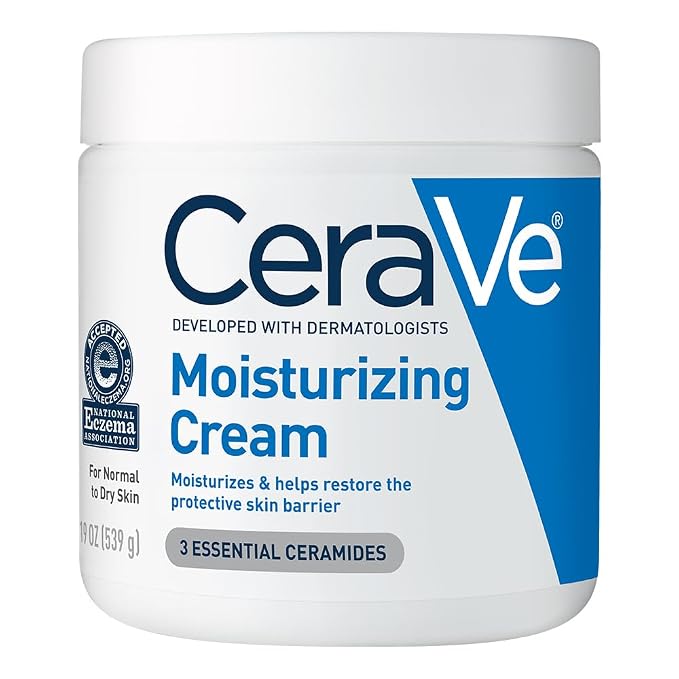
CeraVe Moisturizing Cream (19 oz)
The big tub of ceramide cream for face and body — 145,000+ reviews and a derm-office staple.
📚 Sources & studies
- Draelos ZD et al., Cutis (2006) — Facilitating Facial Retinization Through Barrier Improvement (barrier-support moisturizer before/during retinoid therapy improves tolerance) View study ↗
- American Academy of Dermatology — Retinoid or retinol? Expected adjustment period and how to use retinoids View study ↗
This article is for informational purposes only and is not medical advice. Skincare products affect individuals differently — consult a board-certified dermatologist for concerns about your skin.