Retinal vs. Retinol: The Real Difference (and Why K-Beauty Switched to the Stronger One)
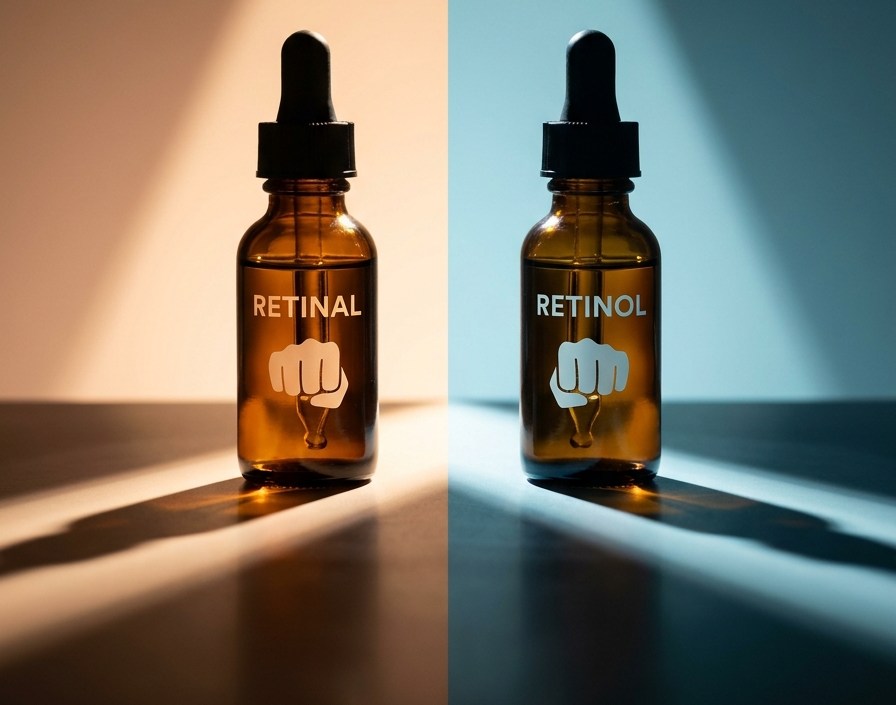
⚡ The 30-Second Version
- ✓The vitamin-A family is a potency ladder — retinyl esters → retinol → retinal (retinaldehyde) → retinoic acid (prescription). The fewer conversion steps your skin has to do, the stronger the effect.
- ✓Retinal is one conversion step from prescription-strength retinoic acid; retinol needs two — which is why retinal is meaningfully more potent while staying gentler than tretinoin.
- ✓You can't compare a retinal % to a retinol % one-to-one: ~0.05–0.1% retinal is a serious dose, while retinol usually runs 0.2–1%. The number on the box means different things for each molecule.
- ✓Start slow — 2 nights a week, night only, sunscreen the next morning is non-negotiable. Never layer it with exfoliating acids the same night, and judge results after 8–12 weeks, not 2.
All over-the-counter 'retinoids' are trying to become one thing on your skin: retinoic acid, the form that actually tells cells to renew faster and build collagen. The difference between products is how many conversion steps your skin has to perform to get there — and that single fact explains almost every retinal-vs-retinol argument you've ever seen.
Retinoid vs. retinol vs. retinal: the whole family, untangled
First, the words, because they get used interchangeably and shouldn't be. 'Retinoid' is the umbrella term for the entire vitamin-A family — it's the category, not a specific ingredient. Inside that family is a potency ladder, ordered by how far each molecule sits from active retinoic acid: retinyl esters (retinyl palmitate — the weakest, needs three conversions) → retinol → retinaldehyde, better known as 'retinal' → retinoic acid (tretinoin, prescription-only, needs no conversion at all).
So when people search 'retinol vs. retinal vs. retinoid,' they're not comparing three rival products — they're looking at different rungs of the same ladder. 'Retinoid' is the whole staircase; retinol and retinal are two specific steps on it. Every one of these except prescription retinoic acid has to be converted by enzymes in your skin before it does anything, and each conversion step loses a little potency. Fewer steps to the finish line means a stronger, faster effect — at the cost of being a bit more likely to irritate.
Retinaldehyde vs. retinol: why one conversion step matters
Retinol needs two conversion steps to become retinoic acid. Retinaldehyde — 'retinal' — needs just one. That single-step head start is the entire reason retinal is more potent: less of the applied dose is lost to conversion, so more of it reaches the active form your skin can actually use. Reviews of the clinical literature position retinaldehyde as a strong second-line option — closer to prescription results than retinol, but far gentler than tretinoin, with less of the peeling and redness that scare beginners off.
The trade-off is real but modest: because retinal is stronger, it can be slightly more irritating than an equivalent retinol if you rush it. Introduced slowly, most people tolerate it well — which is exactly the promise that made it a breakout ingredient.
Retinal vs. retinol percentage: how do the strengths compare?
This is where shopping gets genuinely confusing, and it's one of the most-searched questions on the topic — so let's be clear: you cannot compare a retinal percentage to a retinol percentage one-to-one. They are different molecules, and the same number on the box means very different things. As a rough real-world guide, retinaldehyde is typically formulated at around 0.05% to 0.1%, and even that low number is a meaningful, active dose. Retinol, by contrast, usually shows up at 0.2% to 1%. A 0.1% retinal is not 'ten times weaker' than a 1% retinol — if anything, that low-percentage retinal can be in the same ballpark of strength or stronger, because it's one step closer to the active form.
The practical takeaway: don't chase the biggest number. A higher percentage of a weaker molecule isn't automatically better than a lower percentage of a stronger one, and formulation (how well the retinoid is stabilized and delivered) matters as much as the headline figure. If you're moving from retinol to retinal, treat even a 'low' 0.05–0.1% retinal as a full-strength active and ramp up accordingly — don't assume the small number means you can use it every night from day one.
Why K-beauty switched to 'retinal shots'
All of this explains why newer K-beauty 'retinal shot' serums took off so fast. They offer closer-to-prescription strength with fewer side effects than tretinoin — the sweet spot a lot of people are actually looking for. You get most of the anti-aging and skin-renewal payoff of a true retinoid without needing a dermatologist's prescription or enduring weeks of flaking, provided you introduce it the right way.
How to start retinal without the peeling
Start two nights a week, always at night, and always with sunscreen the next morning — retinoids make skin more sun-sensitive, so daytime SPF isn't optional. Give any new retinoid a solid 8–12 weeks before you judge it; skin renewal is slow by design, and the people who quit at week two quit right before the results show up. If you're not sure whether the early bumps and flaking are normal adjustment or a bad reaction, we broke that down in retinol purging vs. breaking out.
The other big rule is what you put next to it. A retinal and an exfoliating acid (AHA/BHA) on the same night is a fast track to irritation for most people — alternate them instead. Vitamin C, niacinamide, and moisturizers all have their own timing quirks with retinoids, so it's worth knowing what you can and can't layer with a retinoid before you build a routine around one.
Not ready for a true retinoid?
If any conversion-based active still feels like too much, the gentler on-ramp people reach for is bakuchiol — a plant-derived ingredient marketed as 'natural retinol.' It's much milder and better tolerated by sensitive skin, but the honest question is whether it actually delivers retinoid-level results; we compared the evidence in bakuchiol vs. retinol. For most people, though, a well-introduced retinal remains the strongest, best-value step up you can take without a prescription.
The bottom line: retinoid is the whole vitamin-A family; retinol and retinal are two rungs on its potency ladder, and retinal's one-step-shorter path to active retinoic acid makes it the most potent option you can buy over the counter. Ignore the percentage arms race, start low and slow, protect your skin with daily sunscreen, and give it three months.
Heads up: links below are affiliate links — we may earn a small commission at no extra cost to you. Learn more.
🛒 Featured in this post
 Amazon
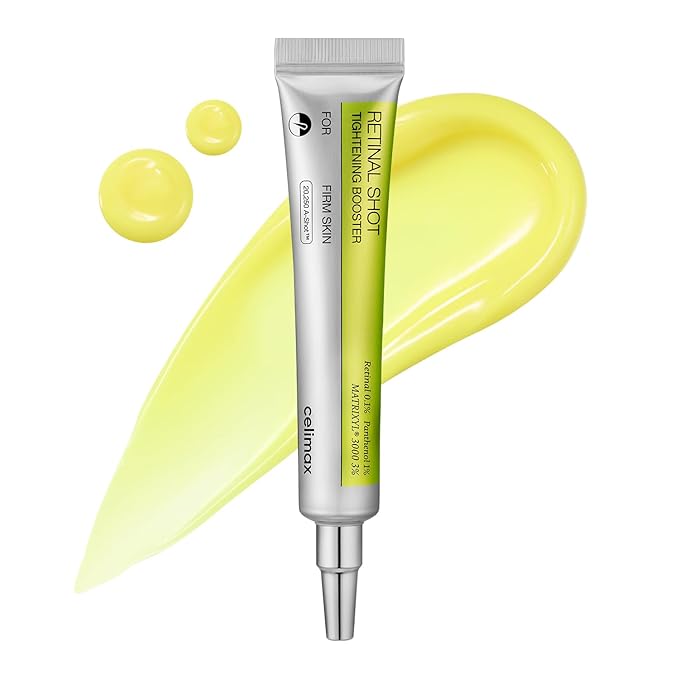
celimax Vita A 0.1% Retinal Shot Booster
K-beauty's next-gen retinal serum — works faster than retinol with less irritation. 18,000+ reviews.
 -20%Amazon
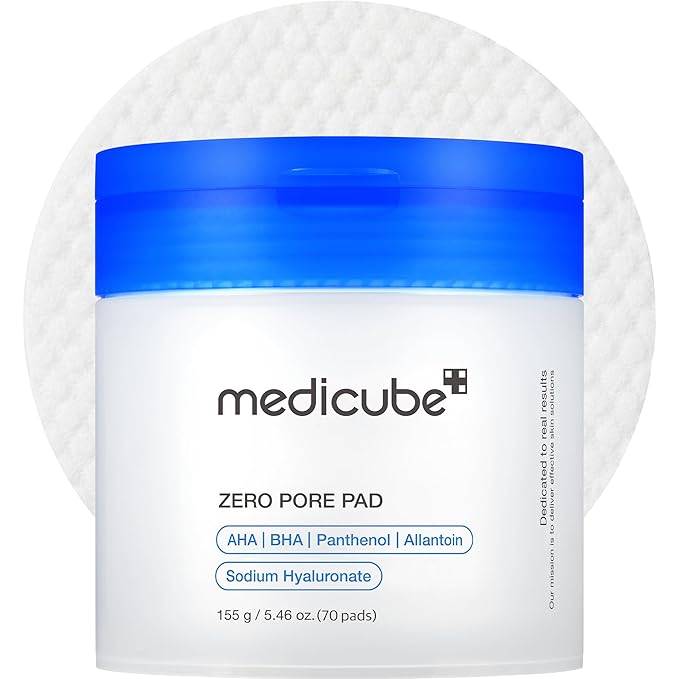
medicube Zero Pore Toner Pads 2.0 (70 Pads)
Korea's viral pore-care pads with 4.5% AHA + 0.45% BHA. 26,000+ reviewers swear by them for texture and blackheads.
📚 Sources & studies
- Zasada M & Budzisz E, Adv Dermatol Allergol (2019) — Retinoids: active molecules influencing skin structure formation — potency and conversion of retinaldehyde vs retinol View study ↗
- Milani M & Sparavigna A, Clin Cosmet Investig Dermatol (2017) — Antiaging efficacy of a retinaldehyde-based topical treatment in photoaged skin View study ↗
This article is for informational purposes only and is not medical advice. Skincare products affect individuals differently — consult a board-certified dermatologist for concerns about your skin.