Vitamin C vs. Niacinamide vs. Azelaic Acid: Which Actually Fades Dark Spots?
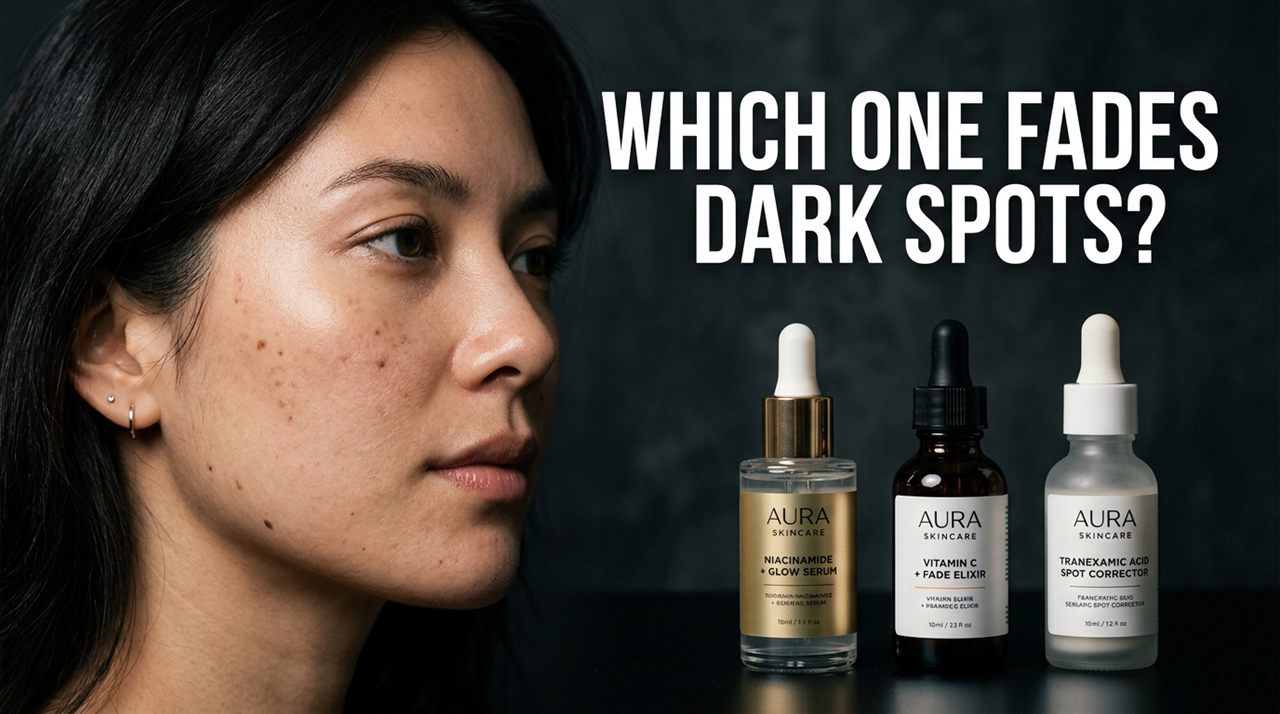
⚡ The 30-Second Version
- ✓All three genuinely fade dark spots, but through different mechanisms and on different timelines: vitamin C and azelaic acid both block the enzyme (tyrosinase) that makes pigment; niacinamide instead blocks pigment from transferring up into visible skin cells.
- ✓Vitamin C's own systematic review found real, measurable pigment lightening — but results took about 3 months to show up, versus roughly 1 month for prescription hydroquinone, and self-reported improvement was less consistent than the objective measurements.
- ✓Azelaic acid has a 16-week clinical trial specifically on post-inflammatory hyperpigmentation and acne marks, plus a broader edge: it's pregnancy-safe and treats acne and redness at the same time as pigment.
- ✓Niacinamide is the gentlest and most layer-friendly of the three — a good daily-prevention pick or a good pairing partner, less a standalone fix for stubborn, established dark spots.
Post-acne marks, sun spots, general unevenness — search for how to fade any of it and you'll get three ingredients thrown back at you almost interchangeably: vitamin C, niacinamide, azelaic acid. They get lumped together as "brightening actives," but they don't do the same job, they don't work at the same speed, and they're not equally good fits for every situation. Here's what each one is actually doing, and how to figure out which one your dark spots need.
Vitamin C: a real tyrosinase blocker, on a slow timeline
Vitamin C's mechanism is direct: it interacts with the copper ions sitting in the active site of tyrosinase, the enzyme your skin uses to manufacture melanin, and that interference reduces how much new pigment gets produced. A systematic review pooling seven studies and 139 participants found that topical vitamin C produced a statistically significant, objectively measured lightening of pigmented skin. The honest caveat: that improvement wasn't fully backed up by how much better patients rated their own skin, meaning the camera-and-colorimeter evidence was stronger than the in-the-mirror impression. Timeline matters here too — substantial improvement from prescription-strength hydroquinone tends to show up within the first month, while topical vitamin C's results typically weren't apparent until around the third month. Vitamin C is real, but it's a slow-and-steady tool, not a fast one — and we've covered why your vitamin C serum degrades over time, which matters even more for a treatment you're relying on for months.
Azelaic acid: slower to talk about, but does double duty
Azelaic acid works through the same tyrosinase-inhibiting family of mechanisms as vitamin C, but it's earned a specific reputation dermatologists reach for on post-acne marks in particular. A 16-week clinical study specifically evaluating 15% azelaic acid gel for post-inflammatory hyperpigmentation and acne found meaningful improvement in both the pigmentation and the underlying acne over the treatment period. What makes azelaic acid stand out from the other two is its dual action — it's also directly anti-acne and anti-inflammatory, so it's treating the breakout that caused the mark and the mark itself at the same time, and it's one of the few actives considered safe to use during pregnancy, when retinoids and higher-strength options are off the table. If your dark spots are specifically post-acne marks rather than sun-related, azelaic acid is arguably the most purpose-built of the three.
Niacinamide: gentler, different mechanism, better for prevention
Niacinamide takes an entirely different route: rather than blocking the enzyme that makes pigment, it interferes with the transfer of already-made melanin from pigment-producing cells up into the surface skin cells where you'd actually see it as a spot. Controlled research found that niacinamide measurably reduces this pigment transfer, which is a genuinely different lever than the tyrosinase-blocking approach vitamin C and azelaic acid both use. Niacinamide also happens to be one of the most tolerable actives available — it layers safely with nearly everything, rarely irritates, and does double duty on oil control (we've covered niacinamide's effect on oil and pores separately). The trade-off: it's generally considered the gentlest, slowest option of the three for treating spots that already exist, which makes it a stronger pick for prevention and gradual, low-irritation maintenance than for aggressively fading a stubborn, established mark on its own.
So which one should you actually pick?
Match the ingredient to the situation instead of chasing whichever one is trending. For post-acne marks specifically, especially if you're also still dealing with active breakouts, azelaic acid's dual action makes it the most efficient single pick — and it's the safe default if you're pregnant. For sun-related spots and general unevenness where you're playing a longer game and want an ingredient that also functions as a daytime antioxidant, vitamin C is the well-evidenced classic, provided you can commit to roughly three months before judging it. For sensitive or reactive skin, or simply as a foundation layer under either of the others, niacinamide is the safest, best-tolerated starting point, with alpha-arbutin as another gentle, no-prescription tyrosinase-blocking option if azelaic acid or vitamin C feel like too much irritation risk. None of these are mutually exclusive: niacinamide layers cleanly with either vitamin C or azelaic acid, so a common, well-tolerated approach is niacinamide daily as a base, with vitamin C or azelaic acid added as the more targeted active.
The bottom line: vitamin C and azelaic acid both genuinely block pigment production and take a similar few-months timeline, with azelaic acid's added anti-acne effect making it the sharper tool for post-breakout marks specifically. Niacinamide works through a different, gentler mechanism and is better suited to prevention and layering than to fast-tracking an established dark spot on its own. Pick based on what's actually causing your spots and how much irritation you're willing to tolerate — not based on whichever ingredient has the loudest marketing this month.
Heads up: links below are affiliate links — we may earn a small commission at no extra cost to you. Learn more.
🛒 Featured in this post
 Amazon
Tree of Life Tranexamic Acid Serum
From the same budget-friendly brand as their popular vitamin C serum, this time built around tranexamic acid for dark spots. 143,200+ reviews.
 Amazon
Good Molecules Discoloration Correcting Serum
A budget tranexamic acid serum aimed squarely at post-acne marks and discoloration. 15,600+ reviews.
 Amazon
Minimalist 2% Alpha Arbutin Serum
A budget alpha-arbutin serum — the gentler, no-prescription hydroquinone relative for fading dark spots. 16,500+ reviews.
📚 Sources & studies
- Correia G & Magina S, Journal of Cosmetic Dermatology (2023) — Efficacy of Topical Vitamin C in Melasma and Photoaging: A Systematic Review (7 studies, 139 participants; significant objective lightening, slower timeline than hydroquinone) View study ↗
- Clinical Study, PMID 21637899 — Efficacy and Safety of Azelaic Acid (AzA) Gel 15% in the Treatment of Post-Inflammatory Hyperpigmentation and Acne: A 16-Week, Baseline-Controlled Study View study ↗
- Hakozaki T et al., British Journal of Dermatology (2002) — Niacinamide reduces cutaneous pigmentation and suppresses melanosome transfer View study ↗
This article is for informational purposes only and is not medical advice. Skincare products affect individuals differently — consult a board-certified dermatologist for concerns about your skin.