Slugging or a Ceramide Barrier Cream: Which One Does Your Dry Skin Actually Need?
⚡ The 30-Second Version
- ✓Slugging (plain petrolatum) is pure occlusion — a landmark 1992 study measured it cutting water loss by up to ~99%, but it adds zero active ingredients and works best as a sealing top layer.
- ✓A ceramide barrier cream (like Illiyoon's Ceramide Ato) does two jobs at once: it supplies the actual lipids your barrier is short on AND occludes — research shows ceramide formulations measurably rebuild the barrier, not just trap water.
- ✓Acne-prone or oily skin should lean ceramide cream, not petrolatum slugging — trapping heat and oil under a thick occlusive layer for 8 hours can worsen active breakouts.
- ✓Very dry, barrier-stripped skin (over-exfoliated, harsh weather) benefits from combining both: ceramide cream first to rebuild, then a thin petrolatum layer on top to seal it in overnight.
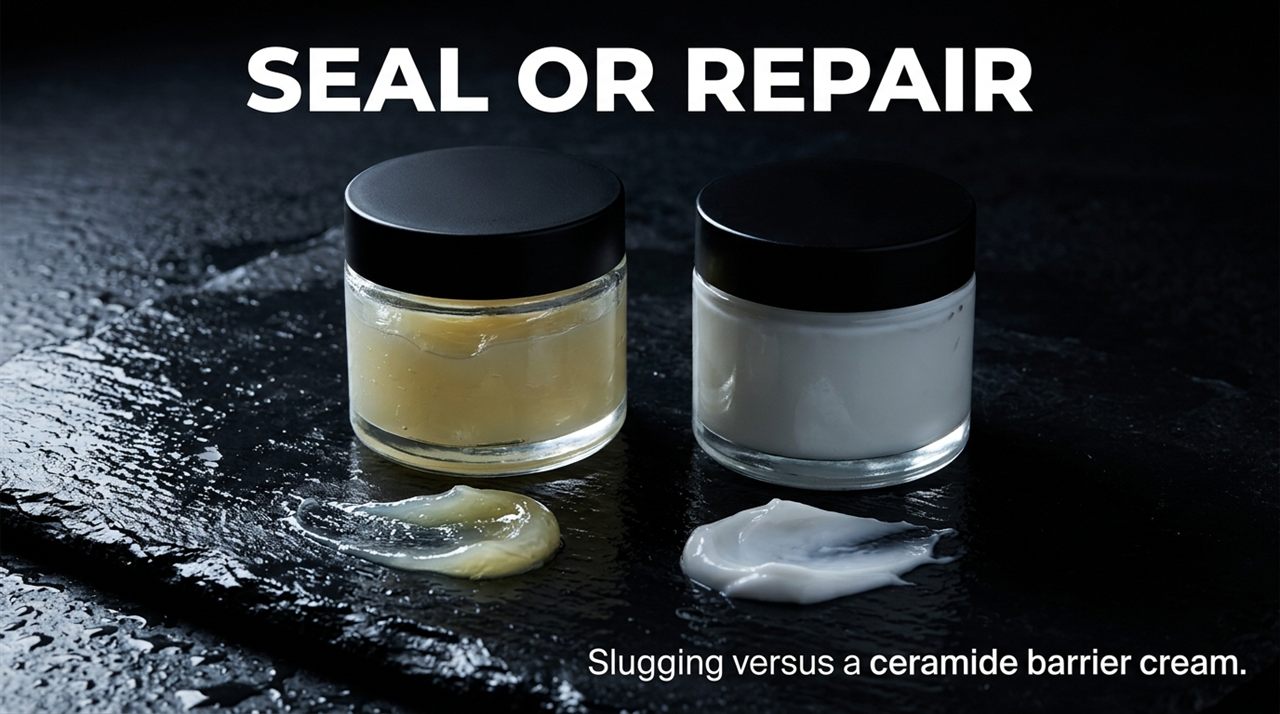
Slugging and barrier creams both get recommended for the exact same complaint — dry, tight, flaky skin — which makes them sound interchangeable. They're not. One traps moisture that's already there; the other actively resupplies what your barrier is missing. Picking the wrong one for your skin type is a common reason 'I tried slugging and it did nothing' or 'I tried a barrier cream and it felt too heavy' happen.
What slugging actually does — and doesn't
We've covered the full mechanism of slugging in depth, but the short version: plain petrolatum is pure occlusion. A landmark 1992 study found it reduces transepidermal water loss by as much as 99%, dramatically more than other occlusives — and it works its way into the outer skin layer rather than sitting on top like plastic wrap. Critically, though, petrolatum contains zero active ingredients. It doesn't add lipids your skin is missing; it just stops the moisture already in your skin from evaporating.
What a ceramide barrier cream does differently
A ceramide-rich cream like Illiyoon's Ceramide Ato Concentrate Cream is doing a fundamentally different job: it's supplying the actual lipid molecules (ceramides) that make up a healthy skin barrier, alongside a lighter occlusive effect. Research on ceramide-containing formulations has shown they measurably reduce water loss and support genuine barrier repair over time — not just a temporary seal, but rebuilding the structure that was leaking moisture in the first place. That's a meaningfully different intervention than pure occlusion.
The decision that actually matters: your skin type
This is where the two diverge in practice. If you're acne-prone or run oily, a thick petrolatum seal trapping heat, sweat, and oil against your skin for eight hours can make active breakouts worse — even though petrolatum itself tests as non-comedogenic in isolation. A ceramide cream is the safer, lighter option there; it still occludes, just not to the same intensity, while doing the added job of barrier repair. If you're genuinely dry or your barrier is compromised (recent over-exfoliation, harsh winter air, retinoid adjustment), a ceramide cream is doing more of the actual repair work than petrolatum alone.
When to use both together
For very dry or barrier-stripped skin, the two aren't mutually exclusive — apply the ceramide cream first so the lipids can actually absorb, then a thin layer of petrolatum on top to seal it in overnight, the same layering logic behind the retinol sandwich technique. That combination gets you resupply and occlusion in one overnight routine.
The bottom line: slugging traps what's there, a ceramide cream resupplies what's missing. Oily or acne-prone skin should default to the ceramide cream; genuinely dry or barrier-damaged skin can layer both for the fastest overnight recovery.
Heads up: links below are affiliate links — we may earn a small commission at no extra cost to you. Learn more.
🛒 Featured in this post
 Amazon
Illiyoon Ceramide Ato Concentrate Cream
A Korean ceramide-rich barrier cream built for sensitive, reactive skin — the moisturizer layer for sandwiching retinol on beginner or easily-irritated skin.
📚 Sources & studies
- Ghadially R et al., J Am Acad Dermatol (1992), PMID 1564142 — The aged epidermal permeability barrier: structural, functional, and lipid biochemical abnormalities (petrolatum occlusion and TEWL reduction) View study ↗
- Spada F et al., Clin Cosmet Investig Dermatol (2018) — Skin hydration and barrier benefits of ceramide-containing formulations View study ↗
This article is for informational purposes only and is not medical advice. Skincare products affect individuals differently — consult a board-certified dermatologist for concerns about your skin.