Salicylic Acid, Explained: Why BHA Gets Into Pores That AHAs Can't Touch
⚡ The 30-Second Version
- ✓Salicylic acid is the only common exfoliating acid that's oil-soluble — it can travel into the sebum inside a pore, not just sit on the surface like AHAs.
- ✓That's why it's specifically comedolytic (unclogs pores), not just keratolytic (sheds dead surface cells) — a real mechanistic difference from glycolic or lactic acid.
- ✓Effective range for daily use is low-and-slow: 0.5–2% in a leave-on product. Higher percentages (up to 30%) exist but are for in-office peels, not nightly use.
- ✓Pair with a barrier-repair moisturizer and don't stack it with a retinoid the same night — same rule as any exfoliating acid.
Salicylic acid gets filed under 'exfoliating acid' right next to glycolic and lactic acid, and that's technically true but genuinely misleading — it does something those other acids structurally cannot do, and that difference is the whole reason it's the default acne recommendation.
The one property that changes everything
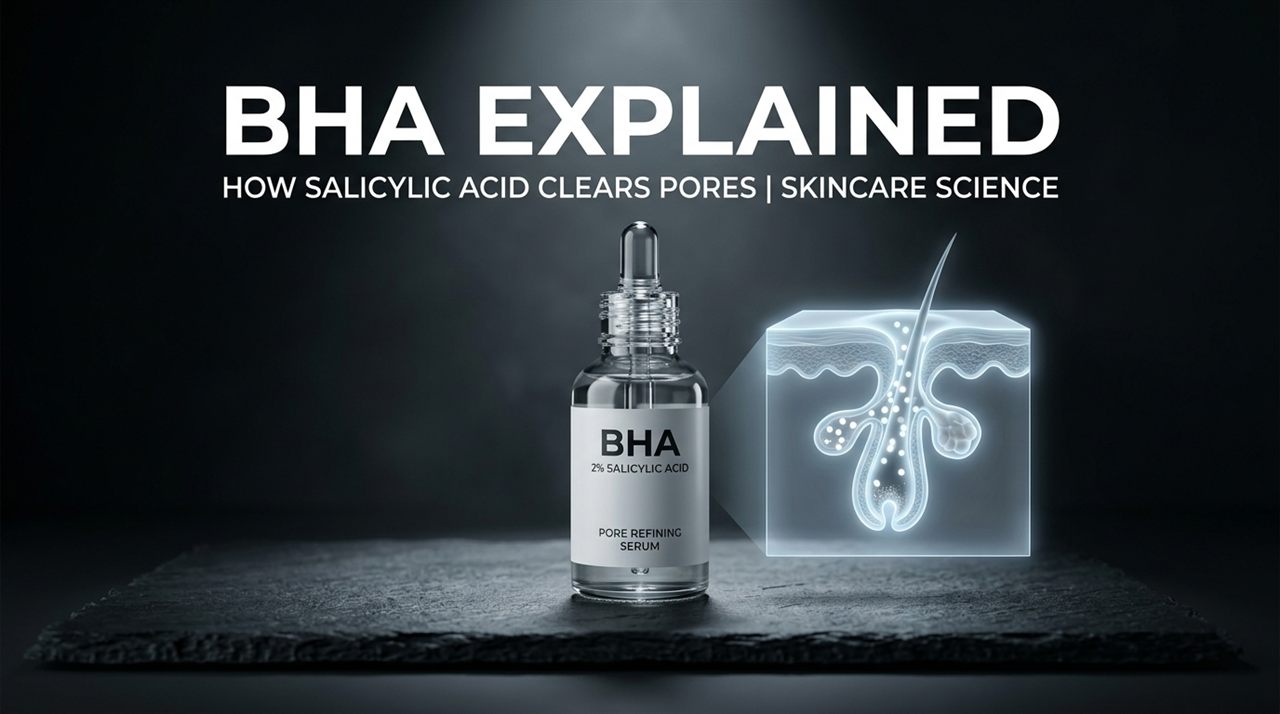
Salicylic acid belongs to a different chemical family entirely — it's a beta-hydroxy acid (BHA), while glycolic and lactic are alpha-hydroxy acids (AHAs). The practical difference comes down to solubility: AHAs are water-soluble, so they work on the surface of skin where water lives. Salicylic acid is lipid-soluble — it can dissolve into and travel through oil. That means it can actually get inside a sebum-filled pore, where AHAs can't follow, and go to work exactly where a clog is forming.
Keratolytic vs. comedolytic: the distinction that matters for acne
Both types of acid are keratolytic — they loosen the 'glue' between dead skin cells so the surface sheds faster. But because salicylic acid can travel into the pore itself, it's also comedolytic: it can dissolve the mix of oil, dead cells, and debris that actually forms a blackhead or whitehead, not just smooth the surface above it. That's a meaningfully different mechanism, and it's why dermatology reviews specifically position salicylic acid as a first-line acne exfoliant rather than an interchangeable AHA swap.
What concentration actually does what
Salicylic acid is used across a wide range — from 0.5% to as high as 30% — but those numbers aren't interchangeable use cases. Leave-on daily products (cleansers, toners, serums) typically run 0.5% to 2%, which is the range with the best evidence for ongoing acne and pore maintenance without excessive dryness. Higher concentrations, in the 20–30% range, are chemical peel territory — professionally applied, rinsed off, and not meant for nightly use at home. If a product markets a high percentage for daily leave-on use, that's a red flag, not a selling point.
How to actually use it
For most people, a 2% BHA liquid or a salicylic-acid cleanser used a few times a week (working up to daily if tolerated) covers the acne-and-texture use case well. It follows the same layering rules as any exfoliating acid: don't stack it with a retinoid on the same night (see our layering guide), and always follow with a moisturizer since BHA can be drying, especially at first. If you're choosing between a rinse-off cleanser and a leave-on liquid, the leave-on version gives the acid more contact time with skin and is generally the more effective format for actual pore-clearing.
The bottom line: salicylic acid isn't 'AHA but for oily skin' — its oil solubility is a genuinely different mechanism that lets it clean out pores from the inside, which is exactly why it's the acid dermatologists reach for first on acne. Keep it in the 0.5–2% daily range, give it a few weeks, and don't pair it with your retinoid on the same night.
Heads up: links below are affiliate links — we may earn a small commission at no extra cost to you. Learn more.
🛒 Featured in this post
 Amazon
Paula's Choice Skin Perfecting 2% BHA Liquid Exfoliant
Dermatologist-recommended cult classic with tens of thousands of reviews for clearing blackheads and refining pores.
 Amazon
CeraVe Renewing Salicylic Acid Cleanser
Exfoliating BHA cleanser buffered with ceramides and hyaluronic acid, so it decongests without wrecking the barrier. 82,000+ reviews.
📚 Sources & studies
- Arif T, Clin Cosmet Investig Dermatol (2015) — Salicylic acid as a peeling agent: a comprehensive review View study ↗
This article is for informational purposes only and is not medical advice. Skincare products affect individuals differently — consult a board-certified dermatologist for concerns about your skin.