Should You Actually Wash Your Face in the Morning? The Answer Isn't What Skincare TikTok Says
⚡ The 30-Second Version
- ✓There's no universal answer — the honest dermatology consensus is that it depends on your skin type and what you did the night before.
- ✓Oily and acne-prone skin genuinely benefits from a morning cleanse: sebum builds up overnight and forms a film that clogs pores and blocks your morning serums from absorbing.
- ✓Dry, sensitive, and normal skin can usually get away with a water-only rinse or a very gentle cleanser in the morning — over-washing here can strip the barrier and cause more problems than it solves.
- ✓The one universal rule: always cleanse properly at NIGHT to remove sunscreen, makeup, sweat, and pollution. Morning is negotiable; night is not.
There are few skincare questions that start more arguments than this deceptively simple one: do you actually need to wash your face when you wake up? One side of the internet treats a morning cleanse as sacred, non-negotiable hygiene. The other side — often citing minimalist and 'skin barrier' influencers — insists that washing your face in the morning is over-cleansing that strips your skin, and that a splash of plain water is not just enough but superior. Both camps are loud, both are confident, and both will tell you the other side is ruining their skin. So who's right?
The genuinely useful answer, the one you rarely get in a punchy 15-second video, is this: it depends — and it depends on things you can actually identify about yourself. The 'always cleanse' people and the 'water only' people are each correct for a specific type of skin and a specific situation, and they get into fights mostly because they're both universalizing their own face. Let's break down what actually happens to your skin overnight, and then match the right morning routine to the right person.
Part of why this question generates so much heat is that it got swept up in a broader skincare backlash. For years the message was 'cleanse twice a day, exfoliate, use ten steps,' and then the pendulum swung hard toward 'skin minimalism' and 'barrier repair,' with a new wave of voices insisting that most people are wildly over-treating their skin. Like most corrections, that one contains real truth — plenty of people genuinely are over-cleansing and over-exfoliating — but it also overshot into blanket rules of its own, like 'never wash your face in the morning,' that simply don't fit everyone. The morning-cleanse debate is really a proxy war between 'more is better' and 'less is more,' when the honest answer is 'the right amount is better, and the right amount is personal.'
What actually happens to your face while you sleep
To decide whether your face needs washing in the morning, you have to know what's on it when you wake up — and the answer is: less than at night, but not nothing. Your sebaceous glands produce oil around the clock, and interestingly, sebum tends to be excreted more heavily during the evening and overnight hours. Over seven or eight hours of sleep, that oil leaves a film on the surface, and dead skin cells from your skin's natural overnight renewal accumulate on top of the stratum corneum, the outermost layer.
On top of your own biology, there's whatever you applied the night before. This is the detail that quietly settles the whole debate. If your nighttime routine includes emollient-rich products — heavy night creams, facial oils, occlusive balms, certain retinol formulas — those ingredients are often not water-soluble. That means a morning splash of plain water physically cannot dissolve them; they stay sitting on your skin. Add the overnight sebum film to that, and for some people there's a genuine layer of oil and residue that a water rinse won't touch, which can trap debris, clog pores, and block your morning serums and sunscreen from absorbing properly.
But — and this is the other half — for a lot of people that overnight buildup is minimal. If your skin runs dry or normal, if your nighttime routine is light, and if you cleansed properly before bed, you might wake up with a face that is essentially clean already. Scrubbing a clean, dry face with a foaming cleanser first thing in the morning doesn't earn you extra points; it can just strip away the natural lipids your barrier spent all night rebuilding, leaving skin tight, irritated, and paradoxically oilier as it overcompensates.
If you have oily or acne-prone skin: yes, cleanse in the morning
Here's where the evidence tilts clearly in one direction. If your skin is oily or acne-prone, a morning cleanse is genuinely worth doing. Oily skin overproduces sebum, and because oil excretion runs high overnight, you often wake up with a real excess layer of grease on your face — you can feel it. Skipping the morning wash lets that oil sit, mix with dead cells and leftover product, and settle into pores, which is a recipe for clogged pores, breakouts, and that persistent midday shine that shows through makeup.
There's a practical bonus, too: that sebum film acts as a barrier against your own skincare. If you layer a nice vitamin C serum or a moisturizer over an unwashed oily face, you're asking those actives to penetrate through a slick of oil — and they largely won't. A gentle morning cleanse clears the runway so the products you paid for can actually reach your skin. For oily and combination skin, a lightweight gentle cleanser (not a harsh, squeaky, high-pH foaming one) in the morning is the sweet spot: it removes the excess without declaring war on your barrier.
If you have dry, sensitive, or normal skin: water is often plenty
Now the other side of the aisle, where the 'water-only' crowd is basically right. If your skin is dry, sensitive, reactive, or comfortably normal — and especially if you did a proper cleanse the night before — a full foaming wash every morning can do more harm than good. These skin types don't generate a heavy overnight oil slick, so there's little to remove. What a stripping morning cleanser can do is remove the good stuff: the natural lipids and the leftover benefits of your night cream, leaving the barrier compromised, tight, and more prone to irritation.
For these skin types, a splash of lukewarm (not hot) water, gently patted — or at most a very mild, non-foaming cleanser — is usually all the morning requires. It freshens the surface, removes the loose bits, and preps skin for moisturizer and sunscreen without picking a fight with your barrier. If your skin feels tight, squeaky, or stingy after your morning routine, that's a sign you're over-cleansing, and dialing back to water is likely to help. Sensitive and dry skin almost never regret being washed less in the morning.
There's also a nice practical upside for this group: skipping or lightening the morning cleanse preserves the work your night routine did. If you applied a hydrating serum, a barrier cream, or a treatment before bed, some of those beneficial ingredients are still on your skin in the morning — and a stripping foam wash would rinse that investment straight down the drain. A gentle water rinse leaves those residual benefits largely intact while still letting you layer sunscreen and makeup cleanly on top. For dry and sensitive skin, morning is a moment to protect what you've built overnight, not to scrub back to zero and start over.
The one rule that applies to absolutely everyone
Amid all this 'it depends,' there is exactly one non-negotiable, and it's about the other end of the day: everyone should cleanse properly at night. This is the part that isn't up for debate regardless of skin type. Over the course of a day your face collects sunscreen, makeup, sweat, sebum, and airborne pollution — and unlike the relatively clean overnight buildup, this daytime layer genuinely needs to come off. Sleeping in sunscreen or makeup traps all of that against your skin for eight hours, which is a well-earned recipe for clogged pores, dullness, and breakouts.
So the mental model that resolves the whole argument is: night cleansing is mandatory; morning cleansing is optional and personal. If you get your nighttime cleanse right, your morning routine becomes a low-stakes choice you get to tune to your own skin rather than a rule you're failing at. That reframing alone takes most of the anxiety out of the question.
It's not just whether you wash — it's how
Lost in the 'cleanse vs. don't' shouting match is a variable that arguably matters more than the binary itself: your technique. You can pick the theoretically correct answer for your skin type and still sabotage it with hot water and aggressive scrubbing. Water temperature is the quiet culprit here — hot water feels wonderful on a sleepy face, but it strips away more of your natural protective oils and can leave even well-chosen cleansing routines drying and irritating. Lukewarm water is the boringly correct choice for basically everyone, morning and night. If your bathroom mirror fogs up, your water's too hot for your face.
Pressure and friction matter just as much. Cleansing is not scrubbing; the goal is to lift away oil and debris, not to buff your skin. Using fingertips in gentle circles for a short time, then patting (not rubbing) dry with a clean towel, is gentler and just as effective as scrubbing with a rough washcloth or a bristled brush. Over-mechanical cleansing — the harsh brush, the daily physical scrub, the vigorous towel-rub — can compromise the barrier all on its own, which means someone can technically be 'over-cleansing' even with a mild product simply because of how they're using it. Gentle beats thorough almost every time.
And the finish is part of the routine, not an afterthought. Whatever you cleanse with, the clock starts the moment you're done: applying moisturizer (and, in the morning, sunscreen) to slightly damp skin helps lock in hydration before water evaporates and takes your skin's moisture with it. A common mistake is to cleanse — correctly — and then leave skin bare for ten minutes while doing something else, letting it dry out and tighten before anything goes back on. Cleanse, then promptly rehydrate. The wash is only ever step one.
Seasons, hormones, and why your 'right answer' keeps changing
One more layer that the universal-rule crowd ignores: your skin is not a fixed setting. The correct morning routine for you in humid August may be the wrong one in dry January, because winter's low humidity and indoor heating pull moisture out of skin and push even normally-balanced complexions toward dry and tight — a season when scaling back to water-only mornings often makes sense. Summer's heat and sweat can nudge the same person toward oilier, more congestion-prone skin that appreciates a gentle morning cleanse. Adjusting with the seasons isn't fussiness; it's just paying attention.
The same goes for hormones, stress, medication, and age, all of which shift how much oil your skin produces and how robust your barrier is. Teenage-and-twenties oiliness that demanded a morning wash can mellow into drier, more delicate skin later that prefers water. This is exactly why chasing a single permanent 'right answer' is a losing game — the honest goal is a flexible default you revisit whenever your skin's behavior changes. Treat your routine as a dial you nudge, not a rule you're locked into, and you'll stay in sync with skin that's constantly, quietly changing underneath you.
Your simple morning decision tree
Putting it all together, here's how to actually decide, tonight and tomorrow morning. Ask yourself two questions. One: is my skin oily or acne-prone, or does it feel greasy when I wake up? If yes, do a gentle morning cleanse — your skin and your serums will thank you. Two: is my skin dry, sensitive, or normal, and does it feel comfortable (not greasy) in the morning? If yes, try water-only or a very mild cleanser, and judge by how your skin feels afterward.
And then let your skin, not an influencer, be the final judge. The feedback is quick and honest: if your morning routine leaves your face tight, flaky, or stinging, you're over-cleansing — pull back toward water. If it leaves you shiny, congested, or breaking out with product that won't absorb, you're under-cleansing — add a gentle wash. Skin type isn't even permanent; it shifts with seasons, hormones, and age, so the right answer for you this winter might not be the right answer next summer. The goal isn't to win the internet's argument — it's to read your own face.
The bottom line: there is no universal rule for morning cleansing, and anyone who tells you there is has simply generalized their own skin type. Oily skin benefits from a gentle morning wash; dry and sensitive skin usually thrives on water alone; and everyone, without exception, needs to cleanse properly at night. Match the routine to your skin, adjust by how it actually feels, and ignore the shouting.
Heads up: links below are affiliate links — we may earn a small commission at no extra cost to you. Learn more.
🛒 Featured in this post
 Amazon
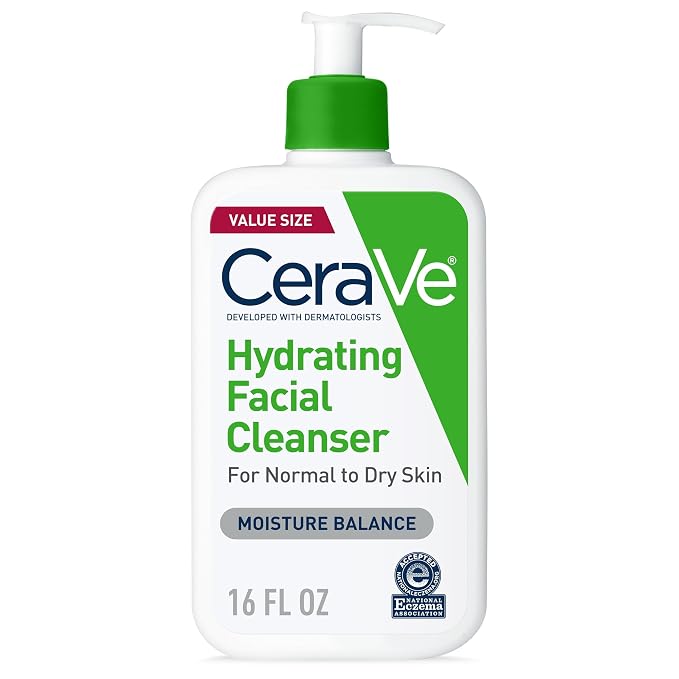
CeraVe Hydrating Facial Cleanser (16 oz)
The dry-skin sibling of our foaming favorite — cleanses without any tightness. 131,000+ reviews.
 Amazon
Cetaphil Gentle Skin Cleanser (16 fl oz)
Dermatologist-recommended #1 cleanser brand with well over 100,000 reviews.
 -16%Amazon
CeraVe Foaming Facial Cleanser (16 oz)
Dermatologist favorite with ceramides + niacinamide. Cleans oily skin without stripping — 4.8 stars, 100,000+ reviews.
📚 Sources & studies
- American Academy of Dermatology — Face washing 101 — how (and how often) to cleanse for your skin type View study ↗
- American Academy of Dermatology — Dermatologists' tips for relieving dry skin (why over-cleansing strips the barrier) View study ↗
This article is for informational purposes only and is not medical advice. Skincare products affect individuals differently — consult a board-certified dermatologist for concerns about your skin.