Why Skincare Textures Got Weird in 2026 (And Why Your Brain Likes It)
⚡ The 30-Second Version
- ✓Sensory skincare — jelly textures, whipped mousses, bubble serums — isn't just packaging gimmickry. Real research on multisensory product design links texture and scent to routine adherence, not just to how a product performs on skin.
- ✓A 2025 review found that lasting skin-feel after application matters more for continued use than the initial texture on application — a mismatch between the two can quietly kill a good routine.
- ✓Texture doesn't change what an ingredient does chemically — a jelly moisturizer with 5% niacinamide isn't more effective than a plain cream with 5% niacinamide. It changes whether you actually keep using it.
- ✓The honest takeaway: pick a texture you enjoy touching every day. Adherence beats theoretical potency you abandon after two weeks.
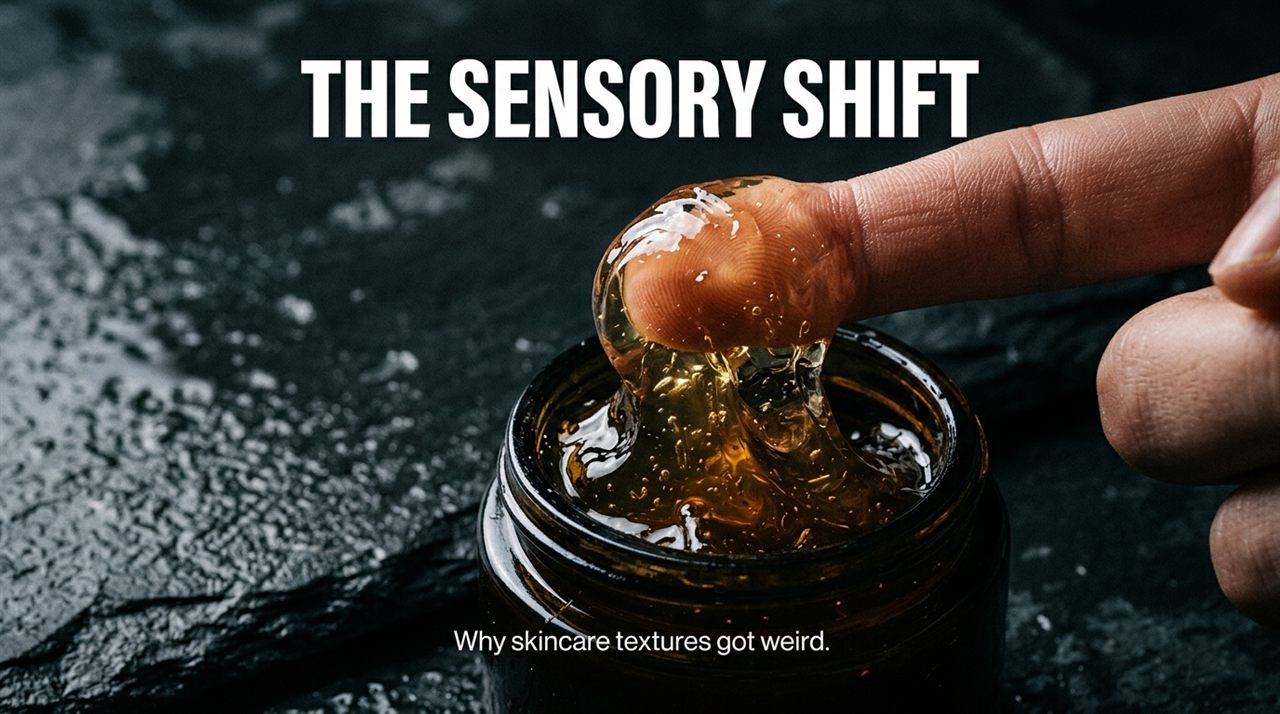
Walk through any skincare aisle in 2026 and the textures have gotten strange — jelly-soft moisturizers that jiggle, cleansers that whip into a cloud-like mousse, serums with a deliberate bubble-pop sensation. It's tempting to write this off as pure marketing theater layered on top of the same old ingredients. The honest answer is more interesting: there's real research suggesting texture isn't just decoration, it's doing psychological work that affects whether you actually stick with a routine.
The science of why texture matters
A 2025 review in Heliyon looked specifically at multisensory design in topical skincare — how texture, scent, and the physical feel of application interact — through the lens of embodied cognition, the idea that physical sensations shape how we think and feel about a product. The review's core finding: multisensory attributes genuinely promote loyalty and treatment adherence, not by changing what a product does chemically, but by changing whether people keep using it. A product that feels satisfying to apply gets applied more consistently than one that feels like a chore.
The detail most sensory-skincare marketing misses
Here's the part that's easy to overlook: the same research found that lasting skin-feel after application matters more for continued use than the initial texture on application. A jelly mist that feels delightful for the three seconds it takes to apply, but leaves skin feeling tacky or heavy an hour later, can actually hurt adherence rather than help it — the fun texture creates a mismatch with how the product actually behaves on skin over time. The trend works best when the initial sensory hit and the lasting skin-feel are both good, not when one is used to distract from the other.
Where the crossmodal effect comes in
The review also points to a 'crossmodal fit' effect: hedonic (pleasure) response peaks when a product's texture and its scent feel congruent — matched, in a way your brain reads as coherent rather than jarring. A cooling, watery-gel texture paired with a green, herbal scent reads as 'fresh' and feels more satisfying than the same texture paired with a heavy, sweet fragrance that doesn't match the sensory expectation the texture set up. This is part of why some sensory-forward products feel genuinely more pleasant to use than their ingredient list alone would predict.
What this doesn't mean
None of this means a whipped-mousse cleanser cleanses better than a plain gel cleanser with the same surfactants, or that a jelly moisturizer hydrates more than a standard cream with the same humectants. The active chemistry doesn't change because the texture changed. What changes is the psychological layer — whether the product becomes a habit you keep or a bottle that sits half-used in a drawer. Products like CosRX Advanced Snail 96 Mucin Power Essence and jelly-textured masks are popular partly for this reason: the sensory experience keeps people coming back to a step they'd otherwise skip.
The bottom line: sensory skincare isn't just packaging theater — there's real research linking multisensory product design to routine adherence, which quietly matters more for long-term skin results than any single ingredient. Pick textures that feel good going on and after, and you're more likely to actually finish the bottle and see results.
Heads up: links below are affiliate links — we may earn a small commission at no extra cost to you. Learn more.
🛒 Featured in this post
 Amazon
BIODANCE Bio-Collagen Real Deep Mask (4-Pack)
The overnight hydrogel mask that turns transparent when it's done. Wake up plump — 42,000+ reviews say it's worth the hype.
 -26%Amazon
COSRX Snail Mucin 96% Repairing Essence (100ml)
The 105,000-review K-beauty icon. Featherweight glass-skin hydration that layers under everything.
 Amazon
Summer Fridays Jet Lag Mask
Sephora's best-selling overnight mask, prized for its instant plumping, hydrating finish.
📚 Sources & studies
- Rodríguez B et al., Heliyon (2025) — Reshaping the experience of topical skincare products: A multisensory approach for promoting loyalty and adherence View study ↗
This article is for informational purposes only and is not medical advice. Skincare products affect individuals differently — consult a board-certified dermatologist for concerns about your skin.