That 2-Year-Old Mascara Is Basically a Bacteria Smoothie: When Makeup Really Expires (and Why Mascara Is the Worst)
⚡ The 30-Second Version
- ✓Makeup does expire — and mascara is the riskiest of all. Studies have found microbial growth in roughly a third of in-use mascara tubes after just a few months, and expired-mascara analyses have detected Staphylococcus aureus in the majority of samples.
- ✓The little open-jar symbol (e.g. '6M', '12M') is the Period After Opening — the clock starts when you open it, not when you buy it. For eye products like mascara and liquid liner, replace every ~3 months regardless of what the symbol says.
- ✓Wet, water-based products (mascara, liquid foundation, cream shadow) grow bacteria fast; dry powders (eyeshadow, blush, setting powder) last far longer — often 1-2 years.
- ✓Trust your senses: a change in smell, texture, or color means toss it. Using contaminated eye makeup near the eye is a genuine infection risk, not just a performance issue.
Let's be honest about a small, universal act of denial: everyone has a mascara they've had for way too long. It was expensive, it's not empty yet, and throwing away something that still 'works' feels wasteful, so you keep pumping the wand and telling yourself it's fine. Here's the uncomfortable news that this whole article is built around — of everything in your makeup bag, mascara is the single worst thing to hang onto, and the reason is basically a tiny science experiment happening inside the tube every time you use it. If any product deserves a hard expiration rule, it's this one.
This isn't fearmongering to make you buy more makeup. Makeup genuinely does expire, the risks are real (especially near your eyes), and the good news is that once you understand why some products go bad fast and others last for years, the rules become obvious and easy to follow. So let's get into what's actually growing in that tube, decode the little symbol that tells you when to quit, and sort your whole makeup bag into 'toss soon' and 'chill, it's fine.'
First, a quick reassurance so you don't spiral: for a healthy person, occasionally using a product a bit past its prime usually results in nothing worse than lackluster performance — a foundation that oxidizes and goes patchy, a mascara that flakes. The stakes rise specifically around the eyes and on broken or acne-prone skin, where introducing the wrong bacteria has somewhere vulnerable to go. So this isn't a call to panic-toss your entire collection tonight; it's a call to know which items are genuinely higher-stakes (mascara, liner, anything liquid near the eye) and treat those with real discipline, while being reasonably relaxed about the powder blush you've had for a year. Proportion is the whole game here.
Why mascara is a bacteria's dream home
Mascara combines, almost perfectly, every condition bacteria love. It's wet — a water-based formula provides the moisture microbes need to multiply. It's dark and enclosed — the tube is a sealed, light-free chamber. It's warm — it lives in your bathroom and your bag. And critically, you actively inoculate it every single day: every time you pull the wand out, coat it in the natural bacteria living on your lashes and eyelid skin, and plunge it back into that warm, wet, dark tube, you're delivering a fresh bacterial payload into an ideal incubator. Then you pump it a few times for good measure, driving air and organisms deeper in. It's hard to design a better bacteria habitat on purpose.
And this isn't hypothetical — it's measured. Research on in-use mascara has repeatedly found significant microbial contamination: one classic study of single-user tubes found microbial growth in over a third of them after a few months of normal daily use, largely Staphylococcus and fungal species. An investigation specifically into expired mascaras detected Staphylococcus aureus in the large majority of samples and the more concerning Pseudomonas aeruginosa in a meaningful minority. These are not exotic bugs — S. aureus and Pseudomonas are exactly the kinds of organisms that can cause eye infections, styes, and conjunctivitis when introduced to the delicate eye area. That old tube isn't just underperforming; it can be a genuine hazard.
Decoding the little open-jar symbol (PAO)
So how are you supposed to know when something's expired, given that makeup rarely has a bold 'use by' date like milk? The answer is a small, easy-to-miss symbol you've walked past a thousand times: a little open jar with a number and the letter M inside — '6M', '12M', '24M'. That's the Period After Opening, or PAO, and it's the single most useful piece of information on the package. It tells you how many months the product stays good once you've opened it. A '12M' means twelve months after first opening; '6M' means six.
The crucial, commonly-missed detail is that the PAO clock starts when you open the product, not when you buy it. An unopened, well-sealed product can sit in a drawer for a couple of years and be fine; the moment you break the seal and let air, fingers, and wands in, the countdown begins. That's why 'but I barely used it' is not a defense — a two-year-old opened mascara is expired even if it's half full, because the relevant number is time-since-opening, not amount-remaining. A genuinely helpful habit is to jot the open date on the bottom of a product with a marker so you're not guessing later.
And for eye products specifically, treat the PAO as a ceiling, not a target. Even if a mascara's symbol optimistically says 6M, dermatologists and ophthalmologists broadly recommend replacing mascara and liquid eyeliner every three months, precisely because of the contamination dynamics above and the vulnerability of the eye. Three months is the number to tattoo on your brain for anything wet that goes near your lashes.
The wet-vs-dry rule that sorts your entire makeup bag
Here's the single mental model that lets you evaluate any product instantly: water breeds bacteria, dryness starves it. Wet, water-based formulas are hospitable to microbes and expire fast; dry, powder-based formulas are inhospitable and last a long time. Once you internalize that, you barely need to memorize individual timelines — you can just look at a product's texture and know roughly where it falls.
On the fast-expiring, wet end: mascara and liquid eyeliner (~3 months), followed by liquid and cream foundations, concealers, and cream blushes or cream eyeshadows (roughly 6-12 months), which are moist enough to support growth and often applied with fingers. On the long-lasting, dry end: powder products — pressed and loose powder, powder eyeshadow, powder blush, bronzer, setting powder — which can genuinely last one to two years because there's very little water for bacteria to exploit. Lipstick and lip products sit in the middle (about a year), and anything that touches your eyes or an active breakout gets the strictest treatment because the stakes are higher. Pencil liners that you sharpen are a small exception on the dry-ish side, since sharpening shaves off the contaminated tip.
Your senses are a legitimate expiration test
Beyond dates and symbols, you have a surprisingly reliable backup detector built in: your own senses. Cosmetic formulas are designed to look, smell, and feel a certain way, so when they start to break down or grow something, they usually announce it. A change in smell is the biggest red flag — if a product develops a sour, off, or just 'different' odor from when it was new, that's often microbial activity or oxidized oils, and it's time to bin it. A change in texture (a foundation that's separated, a mascara gone clumpy and dry, a cream that's grainy) or in color (a product that's darkened or turned) tells the same story.
The rule that ties it together: when in doubt, throw it out — especially for eye makeup. A mascara is not worth an eye infection, and no half-empty tube is worth risking conjunctivitis or a stye. This is doubly important if you've had any kind of eye infection recently: you should discard any eye makeup you used around that time, because it may be harboring the very organisms that infected you and can reinfect you in a nasty loop. Fresh mascara after an eye infection isn't optional; it's part of the treatment.
It's not just makeup: your skincare expires too (and some actives quietly quit early)
Makeup gets the scary headlines, but your skincare has its own expiration story — and here it's less about bacteria and more about chemistry silently going stale. Some of the most valuable actives are also the most unstable, meaning they can degrade and lose potency well before the product looks or smells 'off.' Vitamin C (especially pure L-ascorbic acid) is the classic example: it oxidizes on exposure to air and light, and a tell-tale sign is the serum turning from pale to deep yellow or brown. Once it's browned, much of its antioxidant punch is gone — you're applying an expensive, oxidized shadow of what you bought. Retinol and other retinoids are similarly light- and air-sensitive, which is exactly why good ones come in opaque, air-restricting packaging.
Sunscreen deserves its own alarm bell, because an expired one isn't just weaker — it can leave you genuinely unprotected while you think you're covered. SPF actives break down over time, and a sunscreen past its date (or one that's been cooked in a hot car all summer) may deliver a fraction of its labeled protection, which is worse than useless because it creates false confidence. Sunscreen carries expiration dates for a real reason: don't nurse the same bottle across multiple summers, and don't trust one that's been baking in heat. As a general rule, water-based and active-heavy skincare (vitamin C, sunscreen, anything in a jar you dip fingers into) turns over faster, while simple, anhydrous products like plain oils and balms are more stable. When a skincare product changes smell, color, or texture, treat that exactly like you would with makeup — it's telling you it's done.
The bacteria reservoirs you forgot about: brushes, sponges, and fingers
Here's a plot twist that undermines even a perfectly fresh makeup bag: your tools can be dirtier than your products. A makeup brush or a sponge that never gets washed becomes its own thriving bacterial and fungal habitat, and then you dutifully drag that habitat across your face — and dip it back into your clean products, contaminating them too. Damp makeup sponges are particularly notorious, because they hold moisture (bacteria's favorite thing) deep inside where it never fully dries. A pristine foundation applied with a filthy sponge is not a clean application; it's an inoculation.
The fix is unglamorous but powerful: wash brushes and sponges regularly — sponges especially often, since they're wet — and let them dry fully before storing. Keep fingers out of jars where you can (a spatula or a squeeze-tube format dramatically cuts contamination compared to scooping cream with your hand), and close every lid completely so you're not leaving products open to air and airborne microbes. Storing everything somewhere cool and dry rather than in the warm, humid zone right next to the shower slows down every kind of spoilage at once. These habits cost almost nothing and quietly do more for your skin's safety than any single product swap — because the cleanest mascara in the world can't save you if the wand, the brush, or the fingers touching it are the problem.
Simple habits that keep your makeup (and eyes) safer
You don't have to become paranoid to dramatically cut your risk — a few small habits do most of the work. First, stop pumping the mascara wand. That in-and-out pumping motion doesn't load more product onto the brush; it mostly just shoves air (and the bacteria riding on it) deep into the tube, accelerating contamination. Instead, gently swirl the wand inside the tube to coat it. Second, never, ever share eye makeup, and be wary of communal testers at makeup counters — a shared mascara or tester is a shared bacterial culture, and studies consistently find shared products far more contaminated than single-user ones.
Third, keep your tools clean and your products sealed: wash makeup brushes and sponges regularly (they're their own bacteria reservoirs), close lids fully, and store makeup somewhere cool and dry rather than in a steamy bathroom right by the shower, since heat and humidity speed everything up. And fourth, build the date-tracking habit — mark open dates, and do a quick makeup-bag audit a couple of times a year to toss the expired stragglers. If you keep disposable cleansing supplies and clean tools in rotation, the whole system stays low-effort. None of this is about waste; it's about not paying for an eye infection to save $30.
The bottom line: makeup absolutely expires, mascara is the riskiest offender, and the Period After Opening symbol — counted from when you open, not when you buy — is your guide. Follow the wet-vs-dry rule (wet expires fast, dry lasts long), swap eye makeup every three months, trust your nose, and never share. Tossing an old tube feels wasteful for a second; an eye infection feels a lot worse for a lot longer.
Heads up: links below are affiliate links — we may earn a small commission at no extra cost to you. Learn more.
🛒 Featured in this post
 Amazon
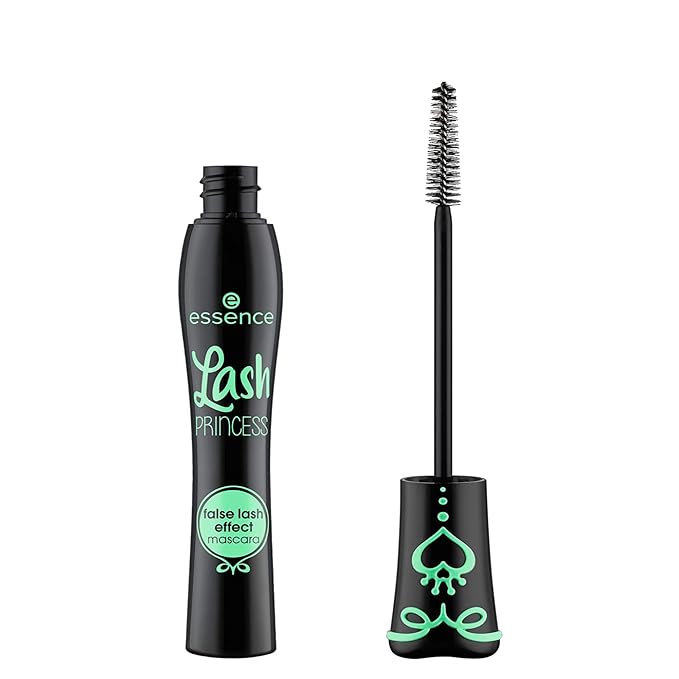
essence Lash Princess False Lash Effect Mascara
415,000+ reviews make this the internet's favorite mascara, period. False-lash drama for under $5.
 -23%Amazon
Maybelline Lash Sensational Sky High Mascara
The TikTok-famous mascara with 185,000+ reviews. Sky-high length without clumps, at a drugstore price.
 Amazon
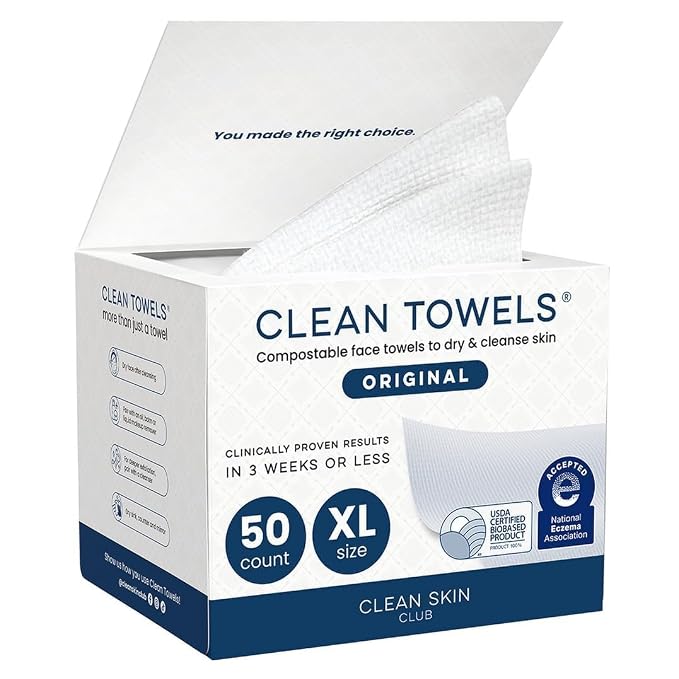
Clean Skin Club Clean Towels XL (50 Ct)
Disposable face towels that replaced washcloths for 44,000+ reviewers. Gentler on breakout-prone skin.
📚 Sources & studies
- Pack LD et al., Contact Lens & Anterior Eye (2008) — Microbial contamination associated with mascara use (single-user tubes, ~36% microbial growth) View study ↗
- Giacomel CB et al., PubMed (2013) — Investigation on the use of expired make-up and microbiological contamination of mascaras (S. aureus 79%, P. aeruginosa 13%) View study ↗
This article is for informational purposes only and is not medical advice. Skincare products affect individuals differently — consult a board-certified dermatologist for concerns about your skin.