Does Gua Sha Actually De-Puff Your Face? A New Study Finally Tested It
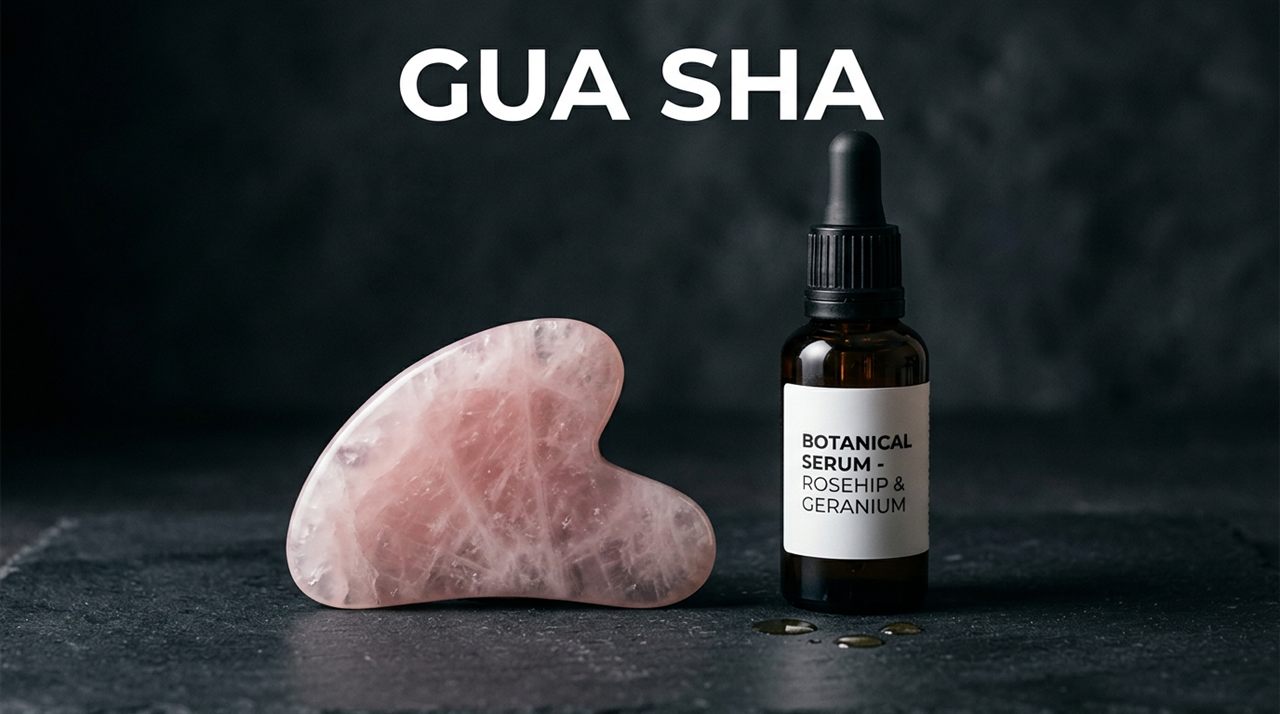
⚡ The 30-Second Version
- ✓For years, gua sha's 'lymphatic drainage' and de-puffing claims had almost no controlled research behind them — mostly plausible mechanism, not proof.
- ✓That changed in 2025: a randomized controlled trial (34 women, 8 weeks) found gua sha massage produced measurable reductions in facial surface distances versus a facial roller.
- ✓The catch: this is a temporary fluid-shift effect, not a permanent change to fascia, fat, or bone — 'contouring' or 'sculpting' language oversells what's actually happening.
- ✓It's a real, if modest and temporary, tool for de-puffing — not a jawline-sculpting device, whatever the packaging implies.
Gua sha went from a centuries-old traditional Chinese medicine tool to a TikTok skincare staple almost entirely on the strength of "lymphatic drainage" claims — the idea that dragging a flat stone across your face pushes out fluid buildup and instantly de-puffs and sculpts your jawline. For years, that claim ran well ahead of any actual controlled research. That's recently changed.
Where the evidence stood until recently
Earlier reviews of gua sha's cosmetic claims were cautious for good reason: while there was mechanistic plausibility — massage and pressure can genuinely affect blood flow and fluid movement — the overall evidence base was judged insufficient to support the specific anti-aging and contouring claims being made. In plain terms: the theory made physiological sense, but nobody had actually measured whether it did what the marketing said.
The 2025 trial that changed that
A randomized controlled trial published in the Journal of Cosmetic Dermatology in 2025 directly compared facial roller massage against gua sha massage in 34 women over 8 weeks, using objective anthropometric measurements rather than just self-reported "I feel less puffy." The gua sha group showed statistically significant reductions in facial surface distances — roughly 2.2 to 2.4 millimeters — suggesting a real, measurable, if modest, physiological effect from consistent use.
What this does — and doesn't — prove
This is a meaningful upgrade in evidence quality, but it's important to be precise about what it shows. The measured effect is best explained as a fluid-shift: temporary movement of fluid away from the area, not a structural change to the fascia, fat compartments, or bone underneath — which is what 'sculpting' or 'contouring' language implies. There's currently no clinical evidence that gua sha produces permanent anti-aging or bone-structure changes, whatever the marketing on some tools suggests. What's now genuinely supported is a real, short-term de-puffing effect from consistent facial massage technique.
How to actually use it
The evidence points to consistency over the exact tool — a proper gua sha stone or a facial roller produced comparable improvements in the trial. Technique matters more than the material: use gentle, upward-and-outward strokes along the jawline, cheeks, and under-eye area, ideally with a facial oil to reduce drag on skin, and expect the de-puffing effect to be real but temporary, not a permanent transformation from one session.
The bottom line: gua sha's lymphatic-drainage reputation finally has real controlled-trial support behind it — a measurable, if modest and temporary, de-puffing effect from consistent use. What it isn't is a jawline-sculpting tool with any evidence of permanent structural change, no matter what the packaging promises.
Heads up: links below are affiliate links — we may earn a small commission at no extra cost to you. Learn more.
🛒 Featured in this post
 Amazon
BAIMEI IcyMe Gua Sha & Jade Roller Set
It won't sculpt bone, but it does move lymph and de-puff a morning face. $9 for both tools — 54,000+ reviews.
📚 Sources & studies
- Ahn J et al., Journal of Cosmetic Dermatology (2025) — Comparative Effects of Facial Roller and Gua Sha Massage on Facial Contour, Muscle Tone, and Skin Elasticity: Randomized Controlled Trial View study ↗
This article is for informational purposes only and is not medical advice. Skincare products affect individuals differently — consult a board-certified dermatologist for concerns about your skin.