Benzoyl Peroxide: The Cheap Acne Fighter Bacteria Can't Beat
⚡ The 30-Second Version
- ✓For red, inflamed pimples, benzoyl peroxide is first-line — and bacteria have never developed resistance to it.
- ✓2.5% works about as well as 10% with far less irritation; you don't need the strongest bottle.
- ✓Expect results in 4–8 weeks. Use white towels (it bleaches fabric) and always moisturize after.
If you have inflammatory acne — the red, angry kind — benzoyl peroxide (BP) is one of the most evidence-backed things you can put on it. It works by releasing oxygen into the pore, which kills the acne-causing bacteria C. acnes.
Its superpower: in decades of use, that bacteria has never developed resistance to BP, unlike topical antibiotics. Reviews note its antibacterial punch actually exceeds some prescription antibiotics, which is why it's a first-line treatment and often paired with other actives to prevent resistance.
Concentration matters less than people think. Studies show 2.5%, 5% and 10% are similarly effective — but higher percentages just cause more dryness and irritation. A gentler wash (like PanOxyl 10% used briefly, or a lower-percentage leave-on) is often the smarter starting point.
Two heads-ups: BP bleaches fabric, so use white towels and pillowcases, and it's drying — always follow with a barrier-supporting moisturizer. Give it 4–8 weeks; acne treatments never work overnight.
Heads up: links below are affiliate links — we may earn a small commission at no extra cost to you. Learn more.
🛒 Featured in this post
 Amazon
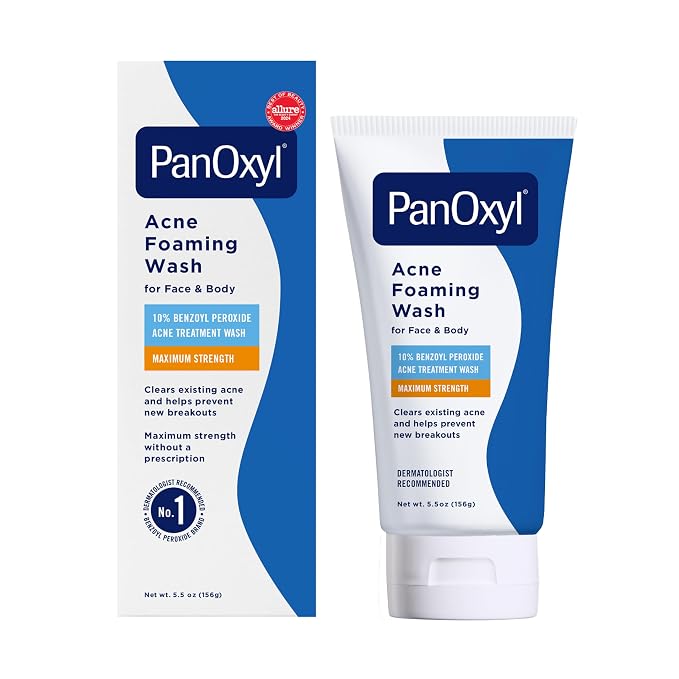
PanOxyl 10% Benzoyl Peroxide Acne Foaming Wash
Maximum-strength benzoyl peroxide wash dermatologists name-drop constantly. 81,000+ reviews.
 -16%Amazon
CeraVe Foaming Facial Cleanser (16 oz)
Dermatologist favorite with ceramides + niacinamide. Cleans oily skin without stripping — 4.8 stars, 100,000+ reviews.
📚 Sources & studies
- Sagransky M et al., Expert Opin Pharmacother (2009) — Benzoyl peroxide: a review of its current use in the treatment of acne vulgaris (no bacterial resistance) View study ↗
- Seidler EM & Kimball AB, J Am Acad Dermatol (2010) — Meta-analysis of benzoyl peroxide, clindamycin and combinations in acne View study ↗
This article is for informational purposes only and is not medical advice. Skincare products affect individuals differently — consult a board-certified dermatologist for concerns about your skin.